
By Densil R. Porteous (he/they)
Executive Director – Stonewall Columbus
When I first stepped into public guidance roles in this community, I often found myself looking for reflections of people who carried identities like mine—Black, queer, navigating the intersections of visibility, responsibility, and expectation. Those reflections were rare. Leadership spaces didn’t frequently make room for us, and when they did, it was often with the unspoken understanding that we still needed to work twice as hard to be heard, to be seen, to be believed.
So, when an individual like Erin Upchurch showed up—fully herself, rooted in justice, unafraid to name truth—it shifted something in the community. Erin didn’t just lead Kaleidoscope Youth Center; she expanded the imagination of what Black queer leadership could look like across Columbus and around Ohio. She reminded us that leadership rooted in compassion, accountability, and lived experience is not only legitimate it…is essential.
There is something profoundly powerful about watching another Black queer leader hold space with clarity and conviction, especially in institutions and systems where our presence has historically been contested. Yes, Erin brought a trauma-informed, youth-centered lens to the work—but she also brought a way of being. Of being soft when needed, fierce when required, always grounded in the belief that our young people deserve joy, connection, and liberation.
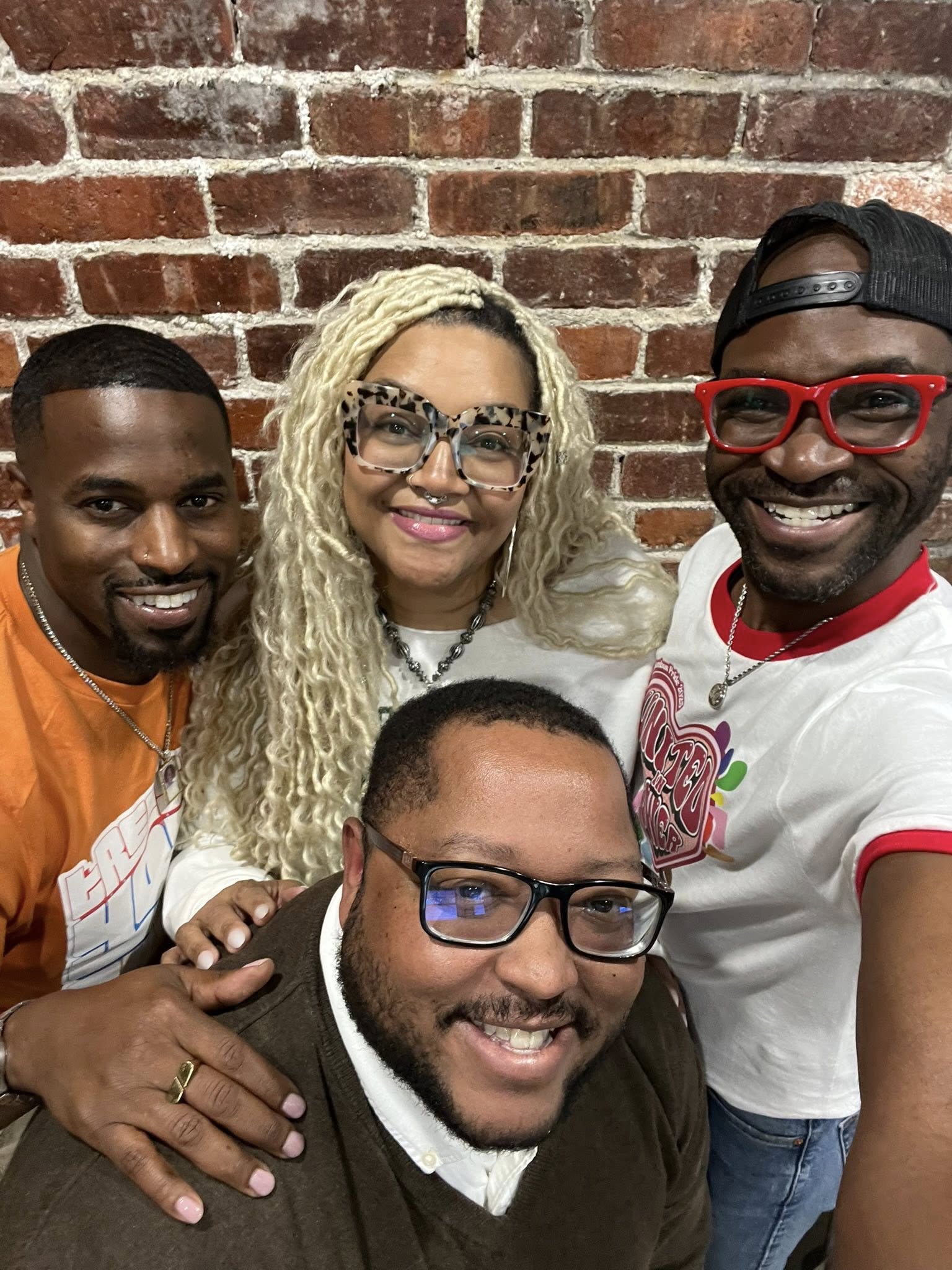
Sawaun Blakely (Left) Erin Upchurch (Center) Densil Porteous (Right) Dewayne Steward (Lower Center)
In the way she showed up in leadership, I saw a mirror. A reminder that our communities are strongest when we refuse to shrink, when we refuse to choose between our identities and our responsibilities. Erin led in a way that said: we belong here—not as tokens, not as exceptions, but as architects of the future.
As she steps down at the end of 2025 from her role guiding KYC, I find myself reflecting on the weight and possibility of leading while Black and queer. We hold the memories of those who came before, many of whom never had the chance to lead out loud. We carry the stories of those who didn’t make it to rooms like ours. And we feel, in our bones, the responsibility to leave doors open wider than we found them.
Erin has done that. Gracefully. Powerfully. Unequivocally.
Her work at KYC changed the landscape for LGBTQ+ youth in Ohio. But her presence, her way of showing up unapologetically as a Black queer woman in leadership, changed the landscape for leaders like me, too. It affirmed that our leadership is not accidental. It is deeply rooted, deeply necessary, and deeply transformative.
As Erin moves into her next chapter, I hold gratitude—for her vision, for her voice, and for the example she set. Her leadership reminds me that our stories, our bodies, our identities are part of the work. They are not separate from it.
We may have entered spaces that were not built for us. But we are building something now—something expansive, equitable, and possible.
And guides, leaders, like Erin are proof that we are not just surviving these spaces; we are reshaping them.